Helping Pets Handle Vacuum Stress: A Calmer Routine
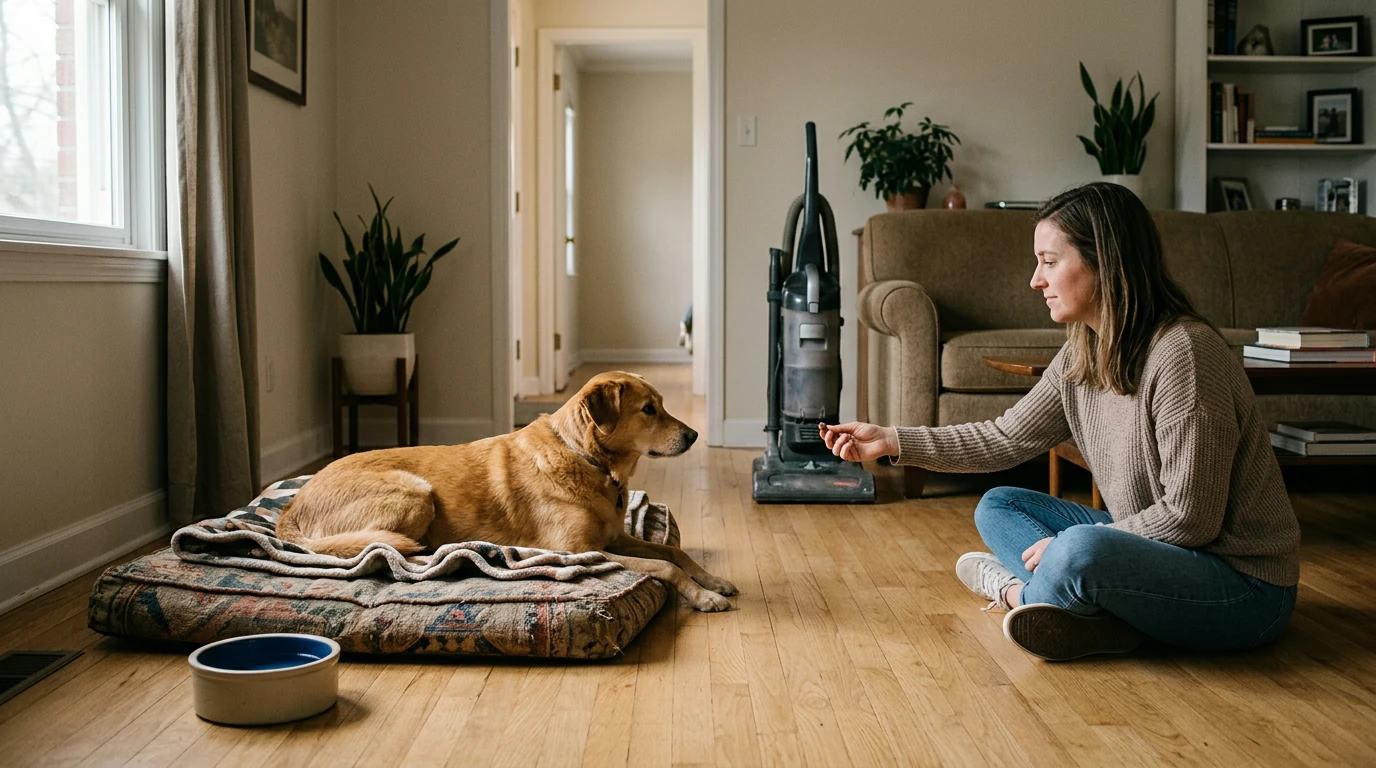
Cleaning day can be unsettling when your pet hears a vacuum roar to life or sees it moving across the floor. Some pets recover quickly, while others need more time and distance. A calmer routine starts by giving your companion a safe choice: they can stay nearby if comfortable or retreat without being followed. For more guidance, see Your dog isn’t afraid of the vacuum; they are reacting to the ….
Our team offers Helping Pets Handle Vacuum Stress for households looking for support with this common challenge. Alongside that option, the gradual steps below can help you make cleaning more manageable without rushing your pet.
Why the Vacuum Can Feel Overwhelming
A vacuum combines a loud, sometimes unpredictable sound with movement, vibration, and changes in direction. To a pet, that combination can be startling, especially when the machine appears suddenly or moves toward a favorite resting spot.
Stress may show up as hiding, trembling, pacing, freezing, barking, or trying to escape. Some pets move away quietly rather than making a fuss. Pay attention to changes in their usual behavior, including whether they stop taking treats they normally enjoy.
Give your pet space when you notice these signs. Pulling them closer to the vacuum or expecting them to “get over it” can make the experience more frightening. The ASPCA’s guidance on noise fears in dogs also emphasizes avoiding situations that overwhelm a fearful dog while working on a gradual plan.
Start With a Safe Space
Before you clean, prepare a quiet area away from the vacuum. Add familiar bedding and make sure your pet has access to water. Choose a location where they can settle without the machine passing close by, such as a separate room.
Let your pet decide whether to use the space. Keep doors and barriers secure so they cannot escape outside, and make sure everyone in the household knows not to disturb them while they rest. If your pet prefers a safe hiding spot within that area, leave it accessible.
A retreat is useful on regular cleaning days and during training. It is not a place to shut a frightened pet in with the noise; the aim is to offer a comfortable distance and a dependable route away from the activity.
Build a Gradual Vacuum Routine
Practice when you have a few spare minutes rather than waiting until you need to clean the whole house. Start with the vacuum switched off and stationary. Place it far enough away that your pet can notice it without becoming tense, then offer a favorite treat or another reward they enjoy.
Do not lure your pet closer than they want to go. You can reward calm behavior at a distance and end the session while they are still comfortable. Repeat this easy step over several sessions before adding movement or sound.
When your pet is ready, introduce the sound briefly from farther away, ideally with another person operating the vacuum while you stay with your pet. Offer a reward, then switch the machine off. Gradually build toward short cleaning sessions over multiple days or longer, depending on your pet’s response.
If your companion hides, freezes, startles, or refuses a usual treat, pause. Increase the distance or return to an easier step next time. Progress does not have to be linear, and some pets may always prefer to relax in another room while you clean.
A Gentle Introduction to the Vacuum
| Step | What to do | When to pause |
|---|---|---|
| Vacuum off | Leave the vacuum stationary at a comfortable distance. | The pet hides, freezes, or moves away. |
| Brief sound | Turn it on briefly at a distance while offering a reward. | The pet startles or will not take a usual treat. |
| Short cleaning session | Vacuum for a short time while the pet has room to retreat. | Stress signs return or intensify. |
Make Cleaning Day More Comfortable
A predictable routine can make it easier to prepare. Choose a regular time when possible, set up the quiet area first, and move your pet away before starting the vacuum. If your pet is comfortable with a brief treat or a favorite activity in their retreat, offer it before you begin.
Keep cleaning sessions short when practical, with breaks between rooms. This gives your pet a chance to settle and lets you notice whether the sound is still too intense. Close a door between the vacuum and the retreat if that helps reduce noise, while ensuring your pet remains safe and has water.
Never chase or restrain a frightened pet, and avoid running the vacuum close to them. If you are also establishing everyday routines with a young dog, our New Puppy Training Starter Guide is another in-stock option for puppy owners.
When to Ask for Help
If your pet’s fear is severe, persistent, or getting worse, stop the exposure and consult your veterinarian. This is especially important if your pet risks injury while trying to escape or struggles to settle long after the vacuum is off. A veterinarian can assess your pet’s needs and discuss appropriate next steps.
A qualified behavior professional can also help tailor a gradual plan to your household. The American College of Veterinary Behaviorists’ directory can help you find a veterinary behaviorist.
For additional support with this everyday challenge, explore our Helping Pets Handle Vacuum Stress listing. It is in stock for $61.99.
FAQ
Should I let my pet hide while I vacuum?
Yes. Provide a safe, accessible retreat and avoid pulling your pet out or forcing an interaction with the vacuum.
How long will it take for a pet to get used to the vacuum?
Timing varies by pet. Use short sessions, move at your pet’s pace, and return to an easier step if stress appears.
What if my pet is still very frightened?
Stop the exposure and consult a veterinarian or qualified behavior professional for guidance.











Leave a comment